
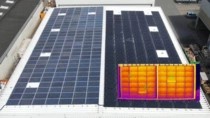
Drone Thermography: How Operators Can Detect Gradual Declines in PV Output Early On
Photovoltaic systems are designed to deliver stable yields for decades—this is the foundation of their economic viability. To ensure that this yield remains reliable, more is needed than just a one-time commissioning: regular, professional maintenance is the key factor. The problem here is not so much the obvious failures as the defects that develop unnoticed.
Creeping defects: the underestimated risk to PV yields
Many types of damage to solar systems do not present noticeable warning signs. Individual modules gradually lose power, connectors heat up unnoticed, and even hail damage sometimes goes undetected for a long time. Only when the sum of these effects results in measurable yield losses does the problem become apparent. This is precisely where thermography for photovoltaic systems comes into play, conducted from the air using drones and thermal imaging cameras.
High Error Rate in Practice
The experience of specialized service providers for aerial thermographic inspections shows just how widespread hidden defects actually are: in their practice, around 70 to 80 percent of all inspected photovoltaic systems exhibit defects. Common findings include defective bypass diodes, microcracks in the solar cells, and hotspots caused by faulty connections.
For operators, this means: Even if a system is running normally, there is a high risk that performance-reducing defects have already formed without becoming visible in day-to-day operations.
The speed at which this happens is particularly insidious: performance losses usually occur gradually and are not detectable to the naked eye. Even system monitoring has its limits here—minor defects often remain below the alarm threshold and are not reported. Over time, however, they add up to an avoidable loss.
How the thermographic aerial survey works
The aerial inspection provides a quick, comprehensive, and cost-effective overview of the system’s condition—largely regardless of the system’s size. The drone systematically flies over the modules, generating high-resolution thermal images.
The technical value lies in the details: even minor temperature differences can be clearly detected and precisely located. This reveals weak spots that remain hidden during a visual inspection or standard monitoring.
Overview of the Benefits of Drone Thermography
There are several concrete benefits for plant operators, planners, and service partners:
- Invisible faults become visible: Hotspots, cell damage, and defective strings can be reliably detected.
- Solid basis for decision-making: The results are incorporated into a structured status report. This provides operators, insurers, and maintenance companies with a transparent basis for repairs or cleaning.
- Time and cost efficiency: Large areas are surveyed in a short time. The time-consuming individual inspection of each module on-site is no longer necessary.
- Return on investment optimization: Early fault diagnosis minimizes performance losses and allows for prompt insurance claims.
When an inspection makes sense
Thermographic drone surveys are worthwhile not only for existing systems but throughout the entire lifecycle. Four points in time are particularly relevant:
- After commissioning: An initial inspection confirms correct installation and provides a baseline for future comparative measurements.
- After extreme weather: Hail, storms, or lightning strikes can cause damage that isn’t immediately visible.
- When performance declines: If yields drop without a clear fault being apparent, thermography helps pinpoint the issue.
- Before the warranty expires: A timely inspection lays the groundwork for asserting potential warranty claims in a timely manner.
Added value for operators, insurers, and service partners
A professional inspection report is more than just a list of faults—it creates transparency for all parties involved. Service technicians know exactly where repairs are needed. Insurers receive clear evidence of any damage that has occurred.
This efficiency gain is particularly crucial for commercial operators of large-scale installations, whether on rooftops or in open fields. Especially with large ground-mounted systems, manually inspecting each module individually is significantly more time-consuming—this is where aerial inspection demonstrates its efficiency advantage.
Prevention Instead of Yield Loss
Those who invest in photovoltaics expect stable long-term returns. Drone-based thermography makes hidden defects visible before they lead to noticeable losses. It is thus not only a component of plant maintenance but also a key element in ensuring profitability.
In practice, this means: Regular, professional drone inspections shift the focus from retroactive damage repair to predictable prevention—an approach that pays off economically over the lifetime of a system.
Frequently Asked Questions (FAQ)
What is the error rate for thermographically inspected PV systems?
Based on the practical experience of specialized service providers, approximately 70 to 80 percent of the systems scheduled for inspection exhibit faults, such as defective bypass diodes, microcracks, or hotspots caused by faulty connections.
Why is system monitoring not sufficient?
Minor defects often remain below the monitoring system’s alarm threshold and are not reported. Nevertheless, they gradually reduce yield, which is why a supplementary thermographic inspection is advisable.
When should a drone inspection be conducted?
Flights are recommended after commissioning, following extreme weather such as hail or storms, in cases of declining yields with no apparent cause, and well in advance of the warranty expiration date.
Is drone thermography also suitable for large ground-mounted systems?
Yes. Aerial inspection covers large areas in a short time, regardless of the system’s size. Especially for ground-mounted systems, it replaces the uneconomical manual inspection of each individual module.
What exactly does the inspection report provide?
It documents the findings in a structured manner and provides transparency: service technicians know where repairs are needed, and insurers receive clear evidence of damage.
Are you planning or operating photovoltaic systems and want to ensure quality standards in assembly and electrical installation? In the free white paper “Understanding—and Avoiding—Common Causes of Damage to Photovoltaic Systems,” expert authors have summarized the most important risks for EMC-direct.
Download the white paper for freeSource reference & further information
First published: November 10, 2025
Source: https://www.photovoltaik.eu/wartung/emc-direct-rendite-schuetzen-durch-thermografie-mit-drohnen
Guest author: Thaddäus Nagy is the Managing Director of EMC-direct