
Electrical conduit: Reliable protection for cables and wires from EMC-direct
Electrical conduits reliably protect cables against mechanical, thermal and - depending on the design - weather-related influences. They are used in building installations as well as in industrial applications and outdoors, for example in PV systems. With the right installation conduits, you can ensure that your electrical installation is permanently stable, standard-compliant and efficient. EMC-direct offers specially designed solutions for demanding applications - discover our selection!
 Corrugated pipe PVC - 750N unslotted
 Corrugated pipe PVC - 750N with tension wire
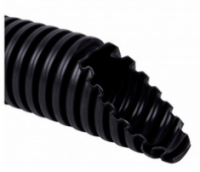 Corrugated pipe PVC - 320N unslotted
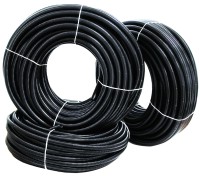 Corrugated pipe PP-BS fire protection unslotted
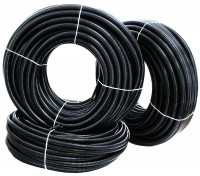 Corrugated pipe PP-BS fire protection slotted
 Corrugated pipe PA6 2-piece NW 6 reclosable (VE50)
 Corrugated pipe HDPE UV smooth inside - pull-in...
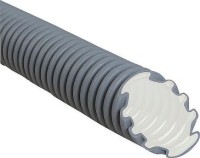 Corrugated pipe FFKUS with sliding layer unslotted
Do you need large quantities of electrical conduits?
Then get in touch with our sales team directly!
Free advice: +49 2369 9846915
What is an electrical conduit and what types are there?
An electrical conduit is a plastic conduit, usually PVC or polyolefin (PP, PE, HDPE), specially developed for electrical installations. It protects cables mechanically and facilitates subsequent installation. Technically, a distinction is made between two main types:
As the name suggests, this conduit is rigid and not flexible. It is often used for clean surface-mounted installations in basements or industrial buildings. The rigid, gray electrical conduit is a classic here.
Material-based systems for advanced applications
In addition to the design, the material plays a decisive role, especially outside the classic flush-mounted installation:
- PVC (standard in building installations): Proven for indoor areas, cost-efficient and easy to process.
- Polypropylene (PP): Higher temperature resistance than PVC; fire protection, halogen-free and UV stability are only given in specific versions.
- Polyamide (PA6): Very high mechanical strength, abrasion resistance and temperature resistance - ideal for building installations.
- HDPE (High Density Polyethylene): Corrosion-resistant, flexible and durable - also suitable for outdoor use, depending on the model.
Comparison: Rigid vs. flexible electrical conduits
| Criterion | Rigid electrical conduit | Flexible electrical conduit |
|---|---|---|
| Structure | Smooth, dimensionally stable conduit |
Corrugated conduit with flexible structure |
| Flexibility | Not bendable, fixed shape |
Very flexible, adapts to pipe routes |
| Installation method | Ideal for straight runs in walls, ceilings and concrete |
Ideal for complex routes, cavity walls and post-installations |
| Installation effort | Higher for changes of direction (bends required) |
Quicker to install due to bendability |
| Mechanical stability | Very high, particularly pressure and impact resistant |
Good, but depends on material and design |
| Cable traction | Very possible due to smooth inner wall |
Very well possible with pull-in aid |
| Area of application | New build, industry, visible surface-mounted installation |
Refurbishment, flush-mounted, flexible cable routing |
| Outdoor use | Only with suitable, UV-stabilized variants |
Often more suitable due to adaptability |
| Typical advantage | Clear, stable cable routing and high protective effect |
Maximum flexibility for difficult installation routes |
Do you require large quantities of electrical conduits?
Then get in touch with our sales team directly!
Free advice: +49 2369 9846915
The most important properties: Compressive strength and diameter
To find the right pipe, the following criteria are decisive:
Diameter
The diameter is specified in mm. Common sizes are 20 mm (M20), M25 or M32. An electrical conduit with a diameter of 20 mm is an all-rounder for many standard applications.
Compressive strength
The following table illustrates the standardized classification system for determining the mechanical and thermal properties of electrical conduits:
| First digit: Compressive strength | Second digit: Impact resistance | Third digit: Min. temp. | Fourth digit: Max. Temp. | Fifth digit: flexibility |
|---|---|---|---|---|
| 1: very light (125N) | 1: 0.5 kg / 100 mm (very light) | 1: +5°C | 1: +60°C | 1: rigid |
| 2: light (320N) | 2: 1.0 kg / 100 mm (Light) | 2: -5°C | 2: +90°C | 2: flexible |
| 3: medium (750N) | 3: 2.0 kg / 100 mm (Medium) | 3: -15°C | 3: +105°C | 3: flexible, self-recovering |
| 4: heavy (1250N) | 4: 2.0 kg / 300 mm (heavy) | 4: -25°C | 4: +120°C | 4: flexible |
| 5: very heavy (4000N) | 5: 6.8 kg / 300 mm (very heavy) | 5: -45°C | 5: +150°C | - |
The advantages of our electrical conduits
Our electrical conduits are specially developed for professional applications and offer comprehensive protection for cables in demanding environments.
- Reliable mechanical protection for cables: Electrical conduits effectively protect cables against abrasion, impacts and dynamic loads, thereby increasing the service life of the entire system.
- High flexibility combined with a stable shape: Flexible electrical conduits are easy to lay and adapt to different conditions, yet retain their shape, enabling clean and safe cable laying - even with complex cable routes.
- Flame-retardant & halogen-free materials: Some variants are flame-retardant and meet important safety requirements for modern electrical installations.
- Quick & easy installation: Flexible designs, slotted variants or reclosable systems enable quick installation and retrofitting of existing cable systems.
- Versatile application options: The electrical installation conduits are suitable for indoor and outdoor areas, for building installations, industrial applications and especially for cabling photovoltaic systems.
Find the right electrical conduit for your application now. Our range is tailored to different indoor and outdoor applications - order now!
Standards & safety for electrical installation conduits
Electrical installation conduits must meet certain safety and quality requirements to ensure that the cables are reliably protected in the long term.
The basis for installation includes EN 61386, which specifies the requirements for conduit systems for cable routing - including aspects such as pressure resistance, temperature resistance and flame resistance - as well as DIN VDE 0100, which regulates the safe installation of electrical cables as a whole. In particular, it defines how cables must be protected, routed and secured against external influences. In addition, requirements for flame retardancy, mechanical stability and temperature resistance play an important role.
For you, this means
- Electrical installation conduits must be sufficiently pressure and impact resistant, depending on where they are used.
- Flame-retardant properties increase safety, especially for installations on buildings.
EMC-direct - High-quality solutions for electrical installation systems
EMC-direct stands for sophisticated solutions in the field of electrical installation and photovoltaics. Our electrical installation conduits and system components are suitable for demanding applications in building installations; some, such as our UV-stable PP corrugated conduits and HDPE corrugated conduits, can be used outdoors.
- Wide range: From standard installation pipes to specialized solutions for demanding applications.
- Tested quality: Our products meet the relevant standards and requirements of modern electrical installations.
- High availability: We offer fast deliveries directly from stock - ideal for time-critical projects.
- Comprehensive advice: Our experts support you in selecting the right electrical conduit for your project.
Discover high-quality electrical conduits for every application. Choose from various sizes, materials and compressive strengths and order directly online.
Frequently asked questions about electrical installation conduits
Is it possible to pull cables into an electrical conduit later?
What needs to be considered when filling the pipe?
Do you need a pull wire in every electrical installation conduit?
Haben Sie Fragen?
Wir sind persönlich für Sie da – Montag bis Freitag von 7:30 bis 16:30 Uhr.
Alternativ nutzen Sie gerne unser Anfrageformular.