
Conduit – Cables Safely and Permanently Protected with EMC-direct
Without a suitable conduit, any electrical installation can quickly become a hazard. Cables are left unprotected against mechanical stress, moisture, or pressure from the soil. A high-quality conduit ensures that your electrical installation remains safe and compliant with standards over the long term. EMC-direct offers a wide range of flexible and robust solutions for professional applications—browse through our product lineup!
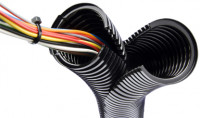 Corrugated pipe PA6 2-piece NW 6 reclosable (VE50)
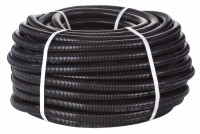 Corrugated pipe PA6 slotted
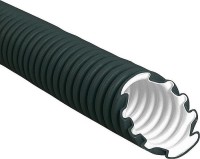 Corrugated pipe FBY Sliding layer unslotted
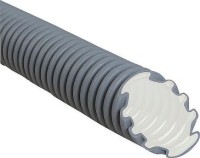 Corrugated pipe FFKUS with sliding layer unslotted
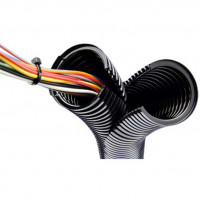 Corrugated pipe PP-UV 2-piece reclosable
The Benefits of Our Conduit Pipes
EMC-direct’s conduit pipes are specifically designed for demanding applications in electrical installations and outdoor environments. They offer a reliable solution for protecting electrical cables in a wide variety of applications. The benefits at a glance:
- Reliable protection of cables and electrical wiring against mechanical damage and environmental influences
- Easier cable pulling and subsequent retrofitting or expansion of wiring
- Neat and organized cable routing in buildings, within concrete, or underground
- Flexible use in various areas such as residential installations, commercial settings, and PV systems
- Reduction of installation errors thanks to clearly defined cable paths
Discover the right conduit for your project now and benefit from tested quality for your projects. Order directly from EMC-direct and ensure reliable cable protection for any environment!
Do you need large quantities of empty conduits?
Then contact our sales team directly!
Free consultation: +49 2369 9846915
Conduit for Underground Cables – Requirements for Installation in the Ground
A conduit for underground cables must meet significantly higher requirements than solutions intended for indoor use. When installed underground, the material is subjected to constant stress from moisture, pressure, and temperature fluctuations.
To ensure that cables and wires remain protected over the long term, a suitable cable conduit should have the following properties:
- High compressive strength for stable underground installation
- Robust and durable plastic material
- Resistance to moisture and external influences
- Sufficient diameter for secure cable pulling
- Optional integrated pull wire for easy cable pulling
Typical applications for a conduit for underground cables include:
Choose the right conduit now and ensure maximum safety for your installation. Discover our product range and order now!
Buy now!
Materials & Types – Which Conduit Is the Right One?
Conduit pipes vary depending on their material, construction, and intended use. The right choice depends on whether the installation is inside a building, in concrete, or outdoors.
The most common types are:
- Corrugated conduit (flexible): Particularly suitable for complex routing paths and quick installation. It is flexible for electrical installations and ideal for building installations, control cabinet construction, automotive engineering, mechanical engineering, and robotics.
- Plastic-armored conduit: Offers high stability and is frequently used as an installation conduit in fixed routing paths, e.g., in concrete or load-bearing structures.
- Cable protection conduit: Provides mechanical protection and ensures the orderly routing of cables and wires. It also facilitates subsequent retrofits or the replacement of cables. Special cable protection conduits or corrugated conduits are often used in sensitive areas.
- Outdoor cable protection conduit: Specifically designed for demanding environments, such as underground installation or PV applications.
- Tele-Pipe: This is a special cable conduit made of HDPE that is primarily used for laying fiber-optic, data, and telecommunications cables. It is particularly suitable for longer distances and demanding installations in network and infrastructure applications.
Comparison of Pipe Types
| Pipe Type | Properties | Applications |
|---|---|---|
| Flexible installation pipe / corrugated pipe | Flexible, suitable for tight bends, easy to retrofit | Hollow walls, ceilings, in-wall installation, retrofitting |
| Rigid installation conduit | Dimensionally stable, smooth routing, mechanically robust | Masonry, permanent installations, surface-mounted |
| Cable protection conduit | Durable, impact- and pressure-resistant depending on the model | Outdoor use, underground installation, garden, PV |
| Empty conduit for data/fiber optic cables | Larger bend radius, gentle cable routing | Network, fiber optics, structured cabling |
Conduit from EMC-direct – Well-designed solutions for your electrical installation
At EMC-direct, you don’t just get a product—you get a well-thought-out solution for your electrical installation. Our conduit is designed for professional applications in the building, industrial, and PV sectors and meets the highest standards for quality and safety.
- Wide selection of conduit for various applications
- Technical advice from experienced experts
- Fast and reliable delivery thanks to high stock availability
- Options for project-specific procurement and custom requirements
Find the right conduit for your electrical installation now and reliably protect your cables from external influences. Our product range offers you flexible and robust solutions—order here now!
Frequently Asked Questions About Conduit
There is no fixed maximum number of cables; two factors are decisive:
Filling ratio: The combined cross-sectional area of all cables should not exceed approximately 40% of the conduit’s internal cross-sectional area.
Thermal agglomeration: When multiple live power cables are located in the same conduit, they heat each other up. The more cables there are, the stronger the effect (regulated by agglomeration factors according to DIN VDE 0298-4).
Our tip: Plan your project from the start with one conduit per circuit, or include spare empty conduits.
As a rule of thumb, a conduit should be filled to no more than 40% of its capacity. This makes it easier to pull cables through and allows for better cooling.
Here’s how to calculate it:
Fill factor = Sum of the outer cable cross-sectional areas / Inner cross-sectional area of the conduit
The area of the circle corresponding to the cable’s outer diameter is used, not the conductor cross-sectional area (e.g., 1.5 mm²). You can find the outer diameter in the manufacturer’s data sheet.
Our tip: If in doubt, choose the next larger conduit size. This makes pulling the cables in easier, protects the cables, and leaves room for future expansions.