
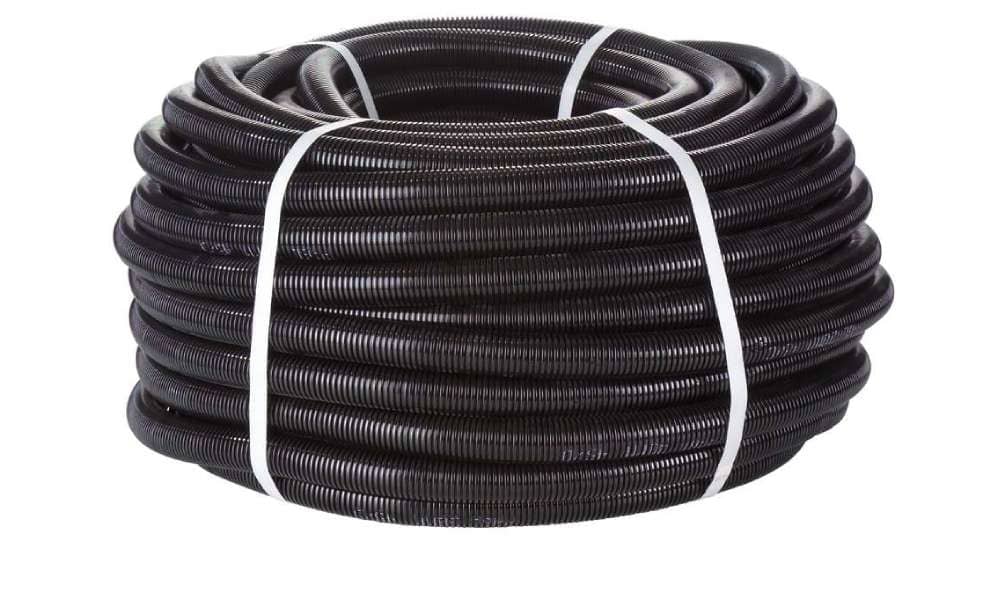
Cable conduit for underground installation of cables and wires
A properly installed cable conduit is the key to reliably protecting underground electrical cables from damage while ensuring compliance with strict standards. In addition to mechanical stress from vehicles or earthworks, cables must also be protected against moisture, frost, and temperature fluctuations. If you’re planning a cable installation or repair project, it’s essential to understand the role of cable protection to ensure safe, durable, and efficient work!
Whether you’re installing high-voltage or data cables, we’ll provide you with important insights into cable protection conduits, their properties, and the best applications.
A selection of products
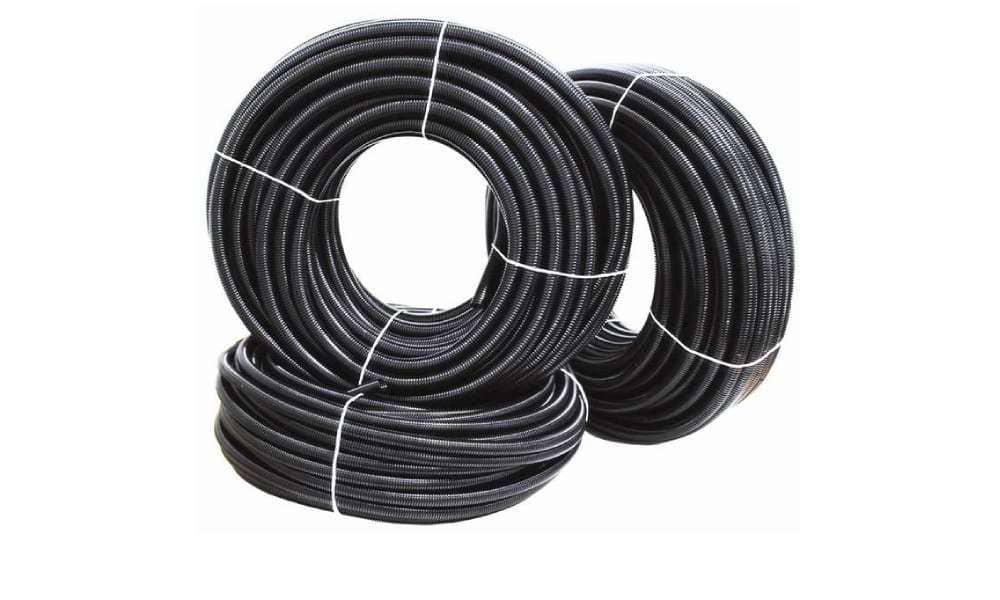
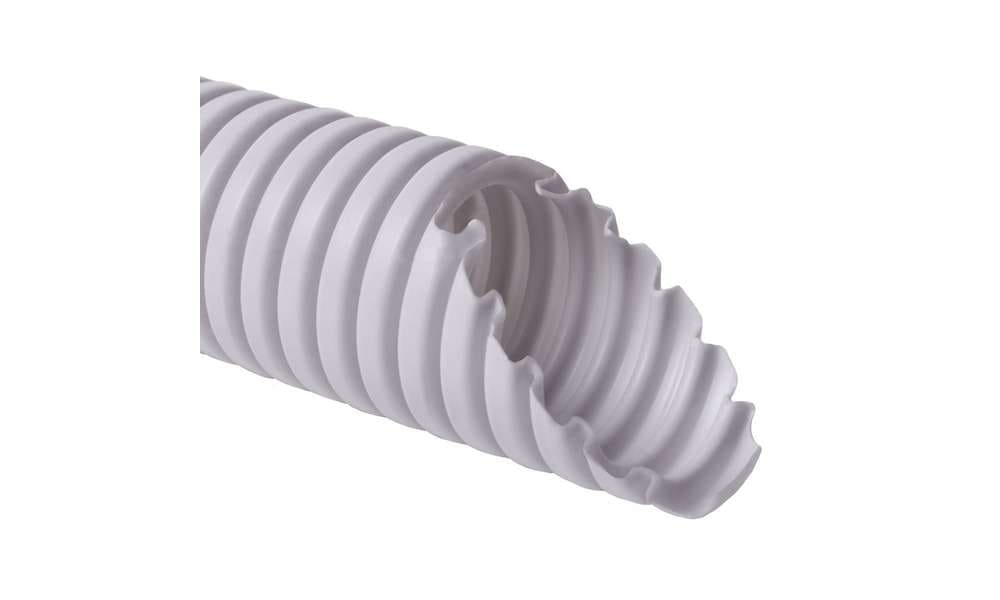
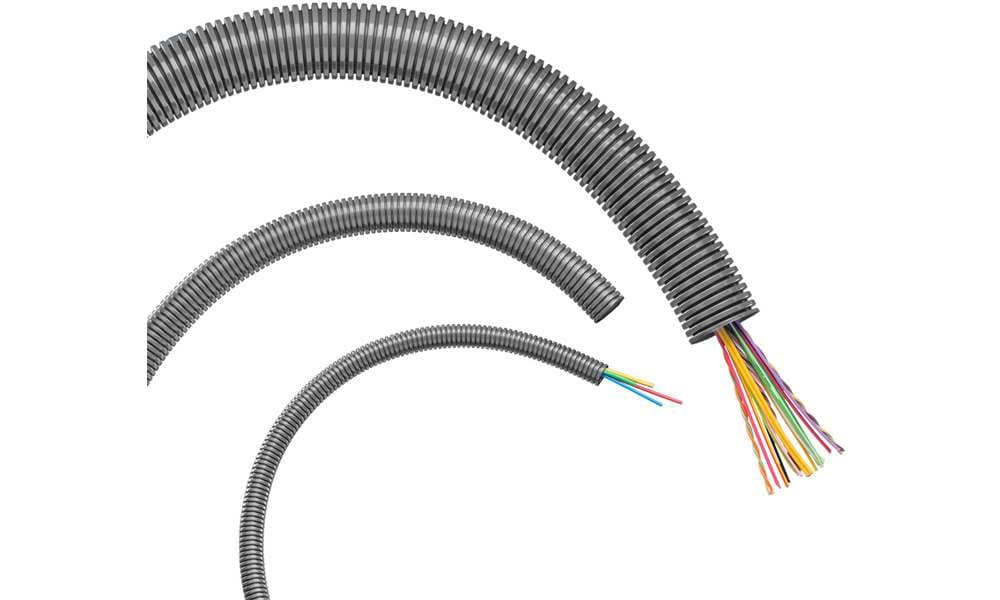
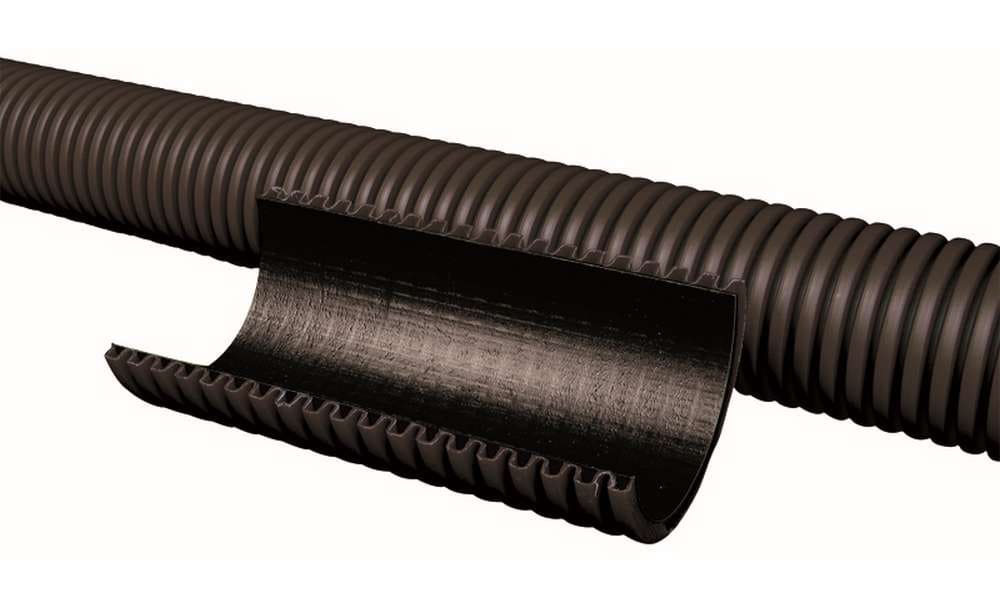
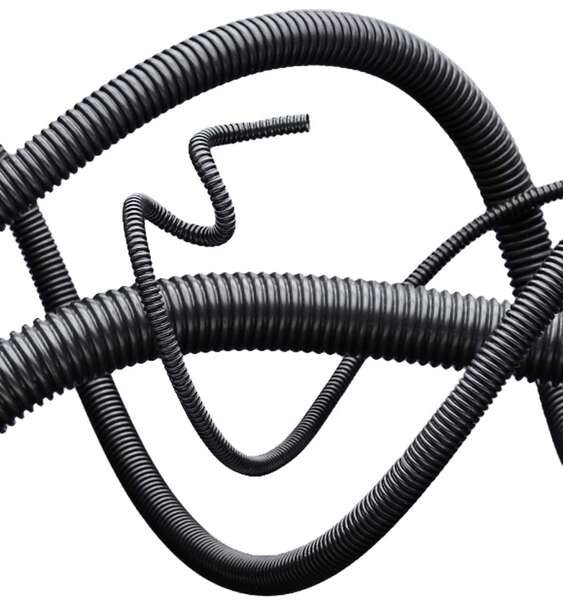
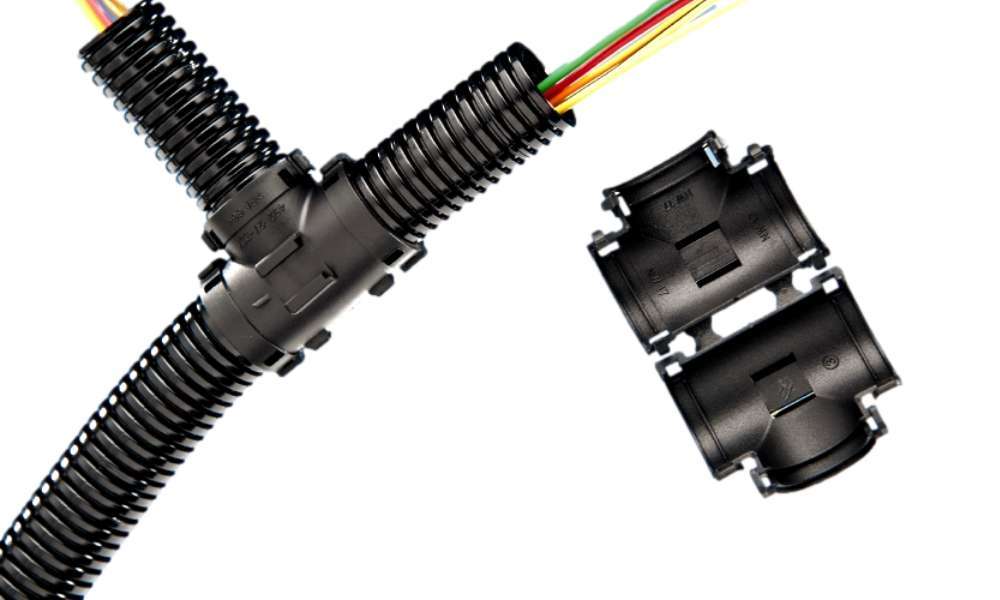
What are cable protection conduits, and why are they essential for cable protection?
Cable protection conduits are specially designed tubes that protect cables from external physical damage. They are crucial for protecting cables and wires in various environments, especially when buried underground. These protective conduits provide a barrier against mechanical stress, environmental factors, and even potential damage from animals.
By providing a robust protective layer, cable protection conduits extend the service life of cables, reduce maintenance requirements, and ensure a safer installation. Whether installing power cables or telecommunications lines, proper cable protection is essential to ensure long-term functionality and safety.
Why Cable Protection Tubes Are Essential for Underground Installation
Burying cables and lines underground is often the most efficient and safest way to install electrical or communication lines. Cable protection pipes are used in this process to ensure that the cables laid in the ground are protected from physical damage, moisture, and other external factors.
Cable protection conduits act as a barrier against soil pressure, excavation work, and even the activities of small animals that can damage cables. With the right protection, cables are less susceptible to mechanical damage and wear over time, which reduces the likelihood of costly repairs or outages.
What are the main types of cable protection conduits?
There are various types of cable protection conduits, each designed for specific installation requirements. The most common types are:
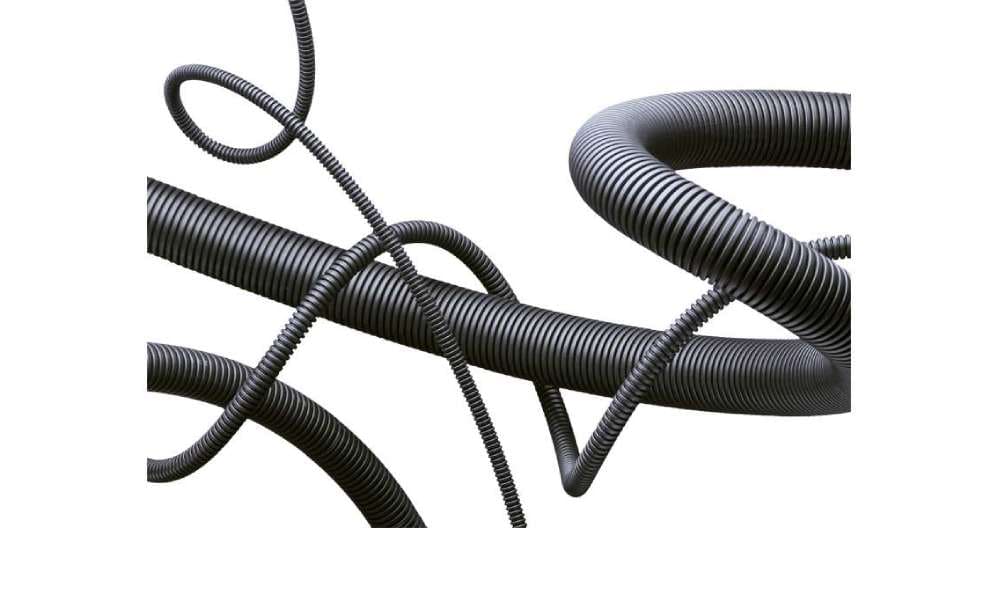
Flexible cable protection tubes
These are ideal for applications where cable runs must navigate tight corners or uneven surfaces. They offer a high degree of flexibility, making them easy to install in complex environments.
Rigid cable protection conduits
These types are primarily used for high-voltage or heavy-duty cables. Rigid conduits are more robust and resistant to mechanical damage, but less flexible than their flexible counterparts.
The materials used to make these protective conduits include HDPE (high-density polyethylene), PVC, and PP (polypropylene), each of which offers unique properties such as chemical resistance, flexibility, and UV protection.
Which cable protection conduits are suitable for which applications?
In our online store, you'll find the right cable protection conduits and other accessories for your project—check them out now!
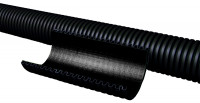 Corrugated pipe HDPE smooth inside - draw-in aid
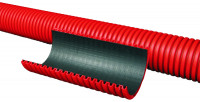 Corrugated pipe HDPE smooth inside - drawing-in...
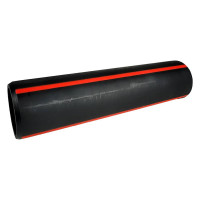

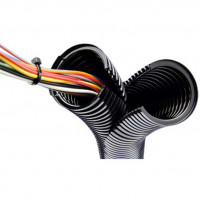
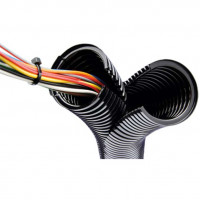 Corrugated pipe PP-UV 2-piece NW 7 reclosable...
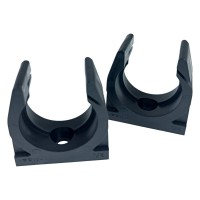
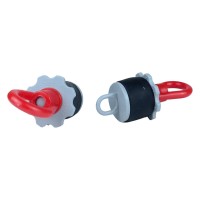

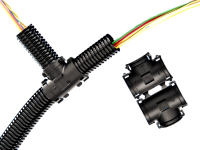
| Sheath Type | Material | Properties | Typical Applications |
|---|---|---|---|
| PVC Conduit | Polyvinyl chloride (PVC) | Durable, cost-effective, easy to install, moderate UV resistance | Landscaping, light earthwork, power supply for outdoor lighting |
| PE protective conduit | Polyethylene (PE) | Highly durable, highly flexible, resistant to moisture and chemicals | Underground installation in public spaces, industrial facilities, cable routes subject to mechanical stress |
| Corrugated pipe (plastic) | PVC or PE | Flexible, easy to install, moderate protection against compressive stress | Service connections, temporary cable installation, small-scale construction projects |
| Steel conduit | Galvanized steel | Highest mechanical strength, corrosion-resistant, flame-retardant | Special protection areas, high-traffic zones, industrial environments |
| Sand bedding + warning tape (additional measure) | – | No conduit, but additional protection through layered construction | Complements protective conduits, increasing the service life and safety of the cables |
Products from E-M-C-direct for underground cable installation
To implement the protective measures described, E-M-C-direct offers a tailored product range. Recommended categories and example products:
- Cable protection conduits (PE, PVC, corrugated conduits) — Select by SN class and diameter
- Mounting & Accessories — Pipe couplings, adapters, seal kits, pull ropes
- Tools — Wire strippers, crimping pliers, insulation testers
Checklist: What You Need for Safe Underground Installation
Before you lay cables underground, you should make sure you have all the necessary materials and tools on hand. This overview is intended to guide you:
-
✔
Appropriate underground cable (e.g., NYY-J according to DIN VDE 0276)
-
✔
Cable conduit of the appropriate size (PE, PVC, or corrugated conduit)
-
✔
Sand or fine-grained material for bedding the cable (protection against mechanical stress)
-
✔
Warning tape to be placed above the cable route (early warning during excavation work)
-
✔
Cable covers or protective plates for areas subject to particularly heavy loads (e.g., driveways)
-
✔
Cable ties and fastening materials for securing the cable inside the protective conduit
-
✔
Tools such as a shovel, wire strippers, and crimping pliers for connections
-
✔
Tester for checking the electrical connection after installation
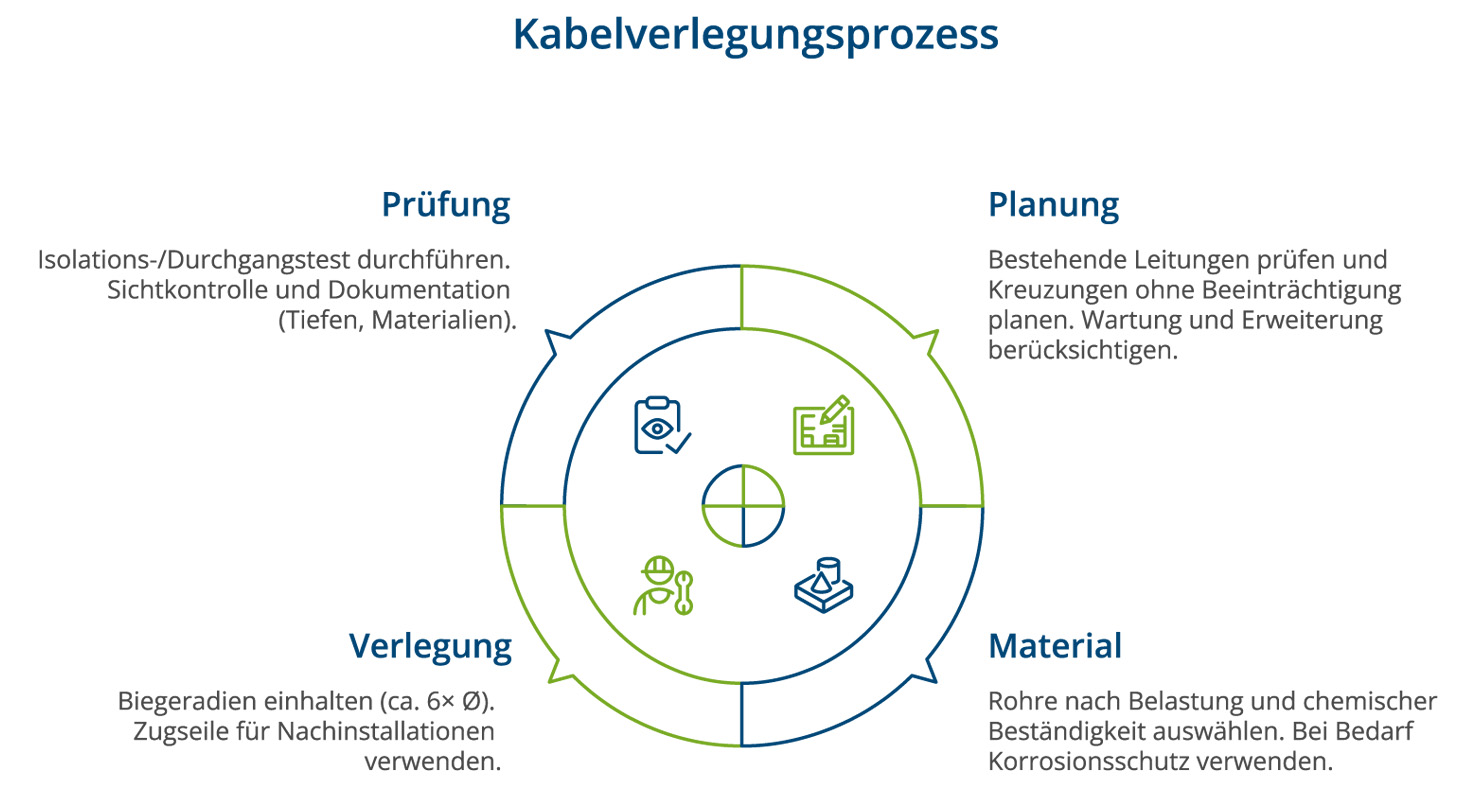
Installing Cable Conduits: Relevant Standards and Regulations
When installing cable protection conduits underground, compliance with applicable standards and regulations is essential for the safety and functionality of your installation. You must be familiar with the following standards:
- DIN VDE 0100 (VDE 0100) – Basic requirements for the installation of electrical systems: Protection against electric shock, selection of circuit protection, conductor cross-sections.
- DIN EN / ISO standards – material properties of conduits (e.g., PE, PVC), requirements for conduits (ring stiffness SN classes).
- Local regulations (e.g., municipal pipeline maintenance rules) & civil engineering requirements – particularly minimum installation depths and safety distances from other pipelines.
Important: Minimum installation depths and specific requirements vary by region. Typical industry values are (for guidance only):
- Service connections (light load): approx. 0.6 m depth
- Public sidewalk/strip: 0.8–1.0 m
- Roadway / driveway: ≥ 1.0 m or as specified by local regulations
Your benefits with E-M-C-direct: Direct ordering, accessories, and professional advice
Cables buried underground require special protection. Flexible or rigid cable protection conduits provide effective protection for underground cables. Flexible cable protection pipes made of PE-HD are particularly easy to install and provide excellent cable protection, particularly in road construction. Special heat-shrink tubing, gel sleeves, and stainless steel cable ties are also used in civil engineering.
The best way to order supplies for your electrical installations is to contact our sales professionals right away or visit our online store at www.emc-direct.de
Get a free consultation now: +49 2369 9846915
FAQ - Cable Protection Tubes for Buried Cables and Wires
1. What materials are used for cable protection conduits? ▼
Cable protection conduits are available in various materials, including PVC, PP, and PE (polyethylene). The choice of material depends on the type of cable and specific requirements such as flexibility, compressive strength, or temperature resistance.
2. What are the advantages of PE-HD cable protection conduits? ▼
PE-HD cable protection conduits offer high impact and compressive strength. The smooth inner layer makes it easier to pull cables through and reduces friction, making installation faster and more cost-effective. In addition, they are halogen-free and have good chemical resistance.
3. How are cable protection conduits connected to one another? ▼
Cable protection conduits can be connected using special couplings that are either slip-on or equipped with sealing rings to ensure a tight connection. This technique enables watertight and secure installation.
4. Can cables be pulled into cable protection conduits that have already been installed? ▼
Yes, retrofitting cables into cable protection pipes is made much easier by the smooth inner surface and the low weight of the pipe materials, such as PE-HD. This allows for cost-effective retrofitting or repair.
5. Are cable protection pipes available in different colors? ▼
Yes, cable protection conduits are available in various colors, with red and black being the most common. Special color requests for different applications are available upon request.
6. What are the specific requirements for using cable protection pipes in road construction? ▼
In road construction, flexible PE-HD cable protection pipes are particularly suitable due to their flexibility and high compressive strength. They protect cables from mechanical stress caused by traffic and weather conditions. Here, too, it is important that the cable protection pipes are easy to install and highly durable.