The connection technology between the solar module and the inverter plays a decisive role in determining whether a photovoltaic system will reliably supply electricity over its entire service life. Especially in ground-mounted solar systems with a large number of connectors, even minor manufacturing defects can quickly add up to performance losses and rising operating costs. This article summarizes what matters most when it comes to connectors, crimping tools, and cable assembly.
Connection Technology as an Underestimated Quality Factor
When wiring solar modules, it is crucial to use the right connectors and install them properly. Field Sales Engineer Jurij Gerdes of Stäubli Electrical Connectors points out that pre-assembled cable harnesses simplify installation and enhance system safety.
If connectors are not installed properly, there is a risk of technical failures, power losses, and higher operating and maintenance costs. The groundwork for this is laid as early as the planning phase.
Standard Requirement According to IEC 60364-7-712
Right from the start of a project, one key requirement must be observed: The IEC 60364-7-712 standard stipulates that only plugs and receptacles from the same manufacturer may be combined, as this is the only way to ensure a permanently secure connection.
This rule is not a formal end in itself. Combining different brands can lead to unreliable contacts and, consequently, to technical failures as well as higher operating and maintenance costs.
Why Crimping Determines Service Life
“Anyone can crimp”—this common assumption falls short. A solar system is expected to operate reliably for about 25 years, and every single crimp connection must meet this expectation.
Qualified tools ensure a verifiable crimp and enhance the quality of the DC connection. This reduces the risk that manufacturing defects will only become apparent as sources of failure during operation.
Qualified Tools and Traceability
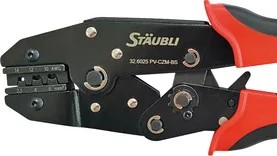
Professional tools are available for the original MC4 product family. The harmonized crimping pliers, tested and approved by Stäubli, cover three conductor cross-sections and ensure proper installation.
A registered design feature makes every crimp traceable. This allows errors to be analyzed retrospectively and avoided in the future—a practical advantage for quality assurance and project documentation.
Pre-assembled Cable Harnesses for Ground-Mounted Systems
Standardized cable assemblies between solar modules and inverters make photovoltaic projects more efficient and reliable. Pre-assembled cable sets reduce both installation time and potential sources of error on the construction site.
Whether custom cable harnesses or standard configurations: Industrial cabling solutions, such as DC-PV cable assemblies certified to IEC 62930, contribute to the system’s durability, performance, and efficiency. For providers of ground-mounted systems, this means predictable quality even for large quantities.
Conclusion: Quality Starts with the Connection
Reliable connectors, the right crimping tool, and suitable cable assemblies are not a minor detail, but rather the foundation for cost-effective PV operation over decades. Those who rely on standard-compliant components and verifiable workmanship can reduce the risks of failure and maintenance.
Frequently Asked Questions (FAQ)
For more in-depth information on avoiding typical sources of error, download the free white paper “Understanding—and Avoiding—Common Causes of Damage to Photovoltaic Systems.”
Download the white paper for freeSource Citation & Further Information:
First published: May 14, 2025
Source: https://www.photovoltaik.eu/wartung/emc-direct-passendes-werkzeug-zum-crimpen-verwenden
Guest Author: Jurij Gerdes is a Field Sales Engineer for Renewable Energy at Stäubli Electrical Connectors