DC Connectors in Photovoltaic Systems: Why Small Components Can Cause Major Failures
An Underestimated Risk at Every Module Connection
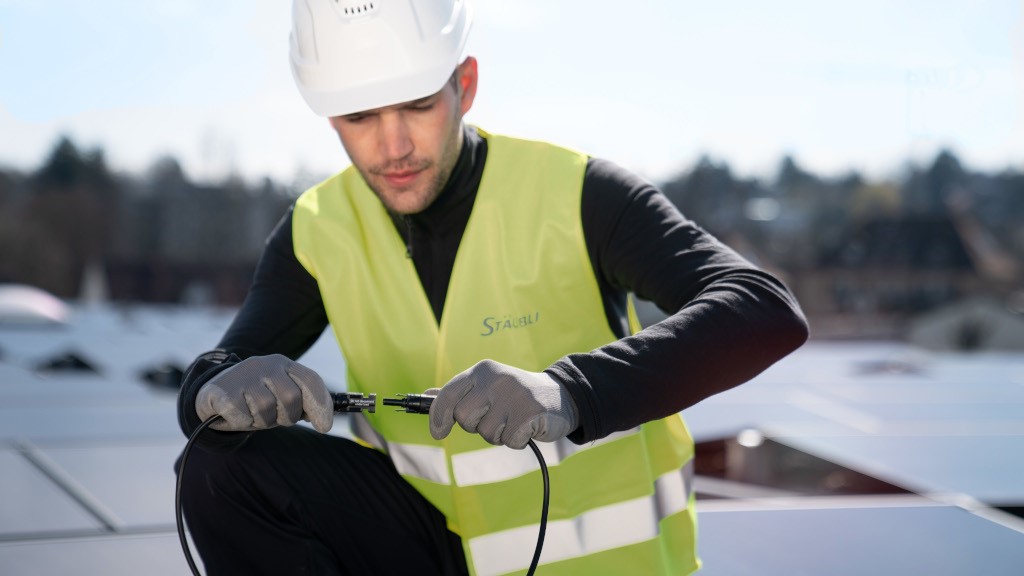
In the engineering and procurement phases of photovoltaic projects, inverters, modules, and mounting systems naturally take center stage. DC connectors, on the other hand, hardly stand out—they are small, inexpensive, and are often treated as a general category during component planning. It is precisely this underestimation that leads to a well-known pattern of damage: both poor product quality and installation errors involving DC connectors are among the most common causes of failures and consequential damage in PV systems.
Yet these connectors operate under demanding conditions: high DC voltages, correspondingly high currents, decades of outdoor operation with UV exposure, moisture ingress, and seasonal temperature fluctuations. Anyone familiar with these real-world stresses understands why component selection is no trivial matter here.
The Insulating Housing: Protection Under Continuous Load
A DC connector is structurally composed of two functional units: the plastic housing (insulating body with cap nut and seal) and the metallic contact element. The housing serves a dual purpose: it insulates the live contacts from the external environment while simultaneously providing mechanical and weather protection for exposed cable conductors.
For long-term operation, the material properties of the plastic are crucial. High-quality housings are tested for thermal resistance, fracture strength, and flexural tolerance. They must demonstrate fire resistance in accordance with relevant standards without compromising the connector’s electrical properties. Housings made of inferior materials can become susceptible to embrittlement and cracking under long-term stress, or compromise insulation resistance due to moisture ingress—with corresponding consequences for safety and reliability.
The Contact Element: The Heart of the Connection
The metallic contact element is the functional core of the DC connector. A spring contact establishes the electrical connection; the solar module lead wires are mechanically and electrically connected to the contact element via crimping. The quality of this connection significantly determines the electrical contact resistance.
A low contact resistance that remains stable over the service life is important for two reasons:
- •Reduction ofohmic losses: A low contact resistance reduces ohmic losses and thus yield losses.
- •Safety through stable contact resistance: A stable, low contact resistance is essential for minimizing the risk of localized heating, thermal failure, or arcing—risks that, in extreme cases, could lead to fires.
MC4 Connectors: A Comparison of Original and Imitation Products
The MC4 connector has established itself in the market as the most widely used connector type for PV module connections. In the industry, the term “MC4” is often used as a generic term—but in fact, it refers to a specific product from the manufacturer Stäubli Electrical Connectors. According to the manufacturer, genuine MC4 connectors are tested beyond the requirements of relevant standards.
The qualification process includes, among other things, rigorous climatic tests with accelerated aging in the laboratory, which simulate long-term behavior under real operating conditions. In parallel with these laboratory tests, outdoor test facilities are used to record real-world aging processes. Independent certification by TÜV Rheinland ensures external validation of product quality.
Economic Dimension: What Quality Means in the Long Term
The decision to use high-quality DC connectors cannot be justified solely on technical grounds—it has a direct economic dimension. Connectors that fail prematurely can incur service costs that exceed the initial cost savings achieved through component selection. Maintenance operations are particularly time-consuming and costly for megawatt-scale ground-mounted systems.
In return, high-quality DC connectors contribute to increased plant reliability, reduced risk of failure, lower maintenance costs, and stable long-term yields. For plant operators and EPCs responsible for providing yield forecasts to investors, this is a sound argument for a differentiated component strategy.
Frequently Asked Questions (FAQ)
Why are DC connectors particularly important for safety in PV systems?
DC connectors carry high DC voltages and currents. Defects in contact elements or seals can lead to arcing, thermal failure, or fires—especially when the connectors are operated outdoors without protection for decades.
What distinguishes original MC4 connectors from imitations?
According to the manufacturer, Stäubli, genuine MC4 connectors are tested beyond the requirements of the standard, including accelerated environmental aging tests and independent TÜV Rheinland certification. Many imitations merely meet the minimum standard requirements or feature unproven material qualities.
What are the most common installation errors with DC connectors?
The most common sources of error include improper crimping, damaged seals, incorrectly sized cable cross-sections, and the combination of connectors from different manufacturers that are nominally declared “MC4-compatible” but may exhibit geometric deviations.
How can contact stability be ensured over the system’s service life?
By selecting connectors with proven long-term stability of contact resistance, ensuring proper installation by trained personnel, and using compatible connector systems. Manufacturers who conduct accelerated aging tests provide verifiable proof of quality for this purpose.
Is it permissible to mix different connector systems?
Compatibility is not guaranteed when combining connectors from different manufacturers. Manufacturers point out that, in such cases, product certifications may no longer apply to the connection—this should be clarified with the manufacturer on a case-by-case basis.
Further information on cable protection and safe DC cabling in PV systems can be found in the technical section of EMC-direct. The free white paper “Understanding—and Avoiding—Common Causes of Damage to Photovoltaic Systems” is available for download.
Download the white paper for freeSource Citation & Further Information
First published: June 3, 2025
Source: https://www.photovoltaik.eu/wartung/emc-direct-dc-steckverbinder-nicht-unterschaetzen
Guest author: Jurij Gerdes is a Field Sales Engineer for Renewable Energy at Stäubli Electrical Connectors.