
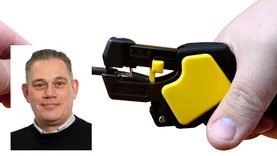
Crimping DC Connectors: Proper Installation in PV Systems
The quality of connector joints has a direct impact on the safety, efficiency, and service life of a photovoltaic system. Even minor errors during crimping can have far-reaching consequences. Therefore, before installation begins, connectors, cables, and tools must be selected as a coordinated system.
Four parameters determine the selection of the appropriate connector: voltage rating, current rating, operating temperature, and the conductor cross-section of the solar cable. Only once the connector has been defined based on these parameters is the appropriate solar cable selected.
Tool Selection: Quality Matters
A crimp connection is only as good as the tool used to make it. Universal tools without explicit approval from the manufacturer are not suitable for PV connectors, as special safety standards apply here. Only stripping tools that automatically adjust to the respective cable cross-section should be used. This is the only way to ensure that no strands are damaged when the insulation is stripped. In addition, certified crimping pliers with a ratchet mechanism are required; these open automatically as soon as the required crimping force is reached.
Stripping: Precise Length, Undamaged Strands
The stripping length depends on the specific connector type and is typically between seven and ten millimeters. Conductors stripped too short do not fully fill the crimp sleeve; conductors stripped too long protrude from the sleeve with bare copper, creating a risk of insulation failure.
When stripping insulation, observe the following points:
- No strands may be damaged or severed when removing the insulation.
- After stripping, briefly twist the strands together to detect or reveal potential damage early on.
- If the stripping is defective, the conductor must be completely cut off and the process repeated, as damaged conductors increase electrical resistance and can lead to fire damage.
Crimping: Positioning, Pressure, Inspection
The stripped conductor is inserted centrally and completely into the crimp sleeve.
The following applies:
Only the bare portion of the conductor may be crimped; the insulation must remain outside the crimp sleeve. Inserting the conductor at an angle or off-center into the crimping tool impairs electrical contact.
The crimping pliers are then pressed all the way through until the ratchet mechanism opens. Prematurely stopping the crimping process results in an incomplete connection that may fail under thermal load. Possible consequences include loss of contact and arcing.
Quality Control: Visual Inspection After Each Connection
Each crimp connection must be visually inspected after fabrication. A properly made connection exhibits the following characteristics:
- Fully and evenly crimped strands
- The crimp connection is symmetrical, firm, and shiny—all signs of sufficient pressure
- There are no loose individual wires or remnants of cable insulation in the crimp area.
- The contact point is clean and free of contaminants or material defects
Only when all these criteria are met is a secure positive lock in the connector guaranteed
Summary: What Matters in DC Crimping
Crimping DC connectors is a safety-critical task that must be performed with particular care in PV systems. Power losses, fire hazards, and system failures can be reliably prevented by using approved tools, compatible materials, and trained personnel. A final visual inspection of each connection is an integral part of the installation process—not an optional additional step.
Frequently Asked Questions (FAQ)
Which tool is suitable for crimping DC connectors in PV systems?
Only manufacturer-approved crimping pliers with a ratchet mechanism—which open automatically once the required crimping force is reached—are suitable. Universal tools without explicit manufacturer approval are not permitted, as special safety standards apply to PV connectors. In addition, self-adjusting wire stripping tools that can be set to the respective cable cross-section are required.
How long does a DC conductor need to be stripped?
The stripping length depends on the specific connector type and is typically between seven and ten millimeters. Conductors stripped too short do not fully fill the crimp sleeve, while conductors stripped too long protrude from the sleeve with bare copper, creating a risk of insulation failure.
How can you tell if a crimp connection has been made properly?
A correct connection features fully and evenly crimped strands and appears symmetrical, firm, and shiny—a sign of sufficient pressure. There must be neither loose individual wires nor remnants of cable insulation in the crimp area, and the contact point must be clean and free of contaminants or material defects.
What happens if a crimp connection is incomplete?
If the crimping process is interrupted prematurely, an incomplete connection results, which may fail under thermal stress. Possible consequences include loss of contact and arcing, which jeopardize the safety of the entire system.
Why is a visual inspection of every crimp connection necessary?
The visual inspection ensures that a secure positive lock is achieved within the connector. It is an integral part of the installation process and not an optional additional step, as faulty connections increase electrical resistance and can lead to fire damage.
Detailed information on typical causes of damage is provided in the free white paper “Understanding—and Avoiding—Common Causes of Damage to Photovoltaic Systems,” which was prepared by expert authors for EMC-direct and is available for download on the company’s website.
Download the white paper for freeSource Citation & Further Information
First published: April 30, 2025
Source: https://www.photovoltaik.eu/wartung/emc-direct-dc-stecker-richtig-crimpen
About the Author: Arnd Diedrichs heads the Product Management and Purchasing departments at EMC-direct. He is an expert in tool development.
The products from EMC-direct—the Dorsten-based specialist in cable protection and fastening technology—are used in large-scale solar projects in Austria and Denmark, among other places.