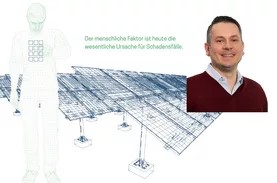
Photovoltaic systems (PV systems) are a long-term investment with clear yield expectations. Technical faults and damage jeopardize this return - especially if they are not due to material failure but to avoidable errors in planning, installation or maintenance. Studies by renowned institutions such as ENVARIS and Trust-PV confirm this: Installation errors and maintenance deficiencies by personnel remain the biggest weak points in PV operation.
The 5 most common causes of damage to photovoltaic systems
In a detailed analysis, energynet and ENVARIS have identified the five most common causes of damage to photovoltaic systems, which are described in more detail in further reliability and safety studies by Trust-PV:
- 1 Fire damage (often caused by arcing due to faulty DC connections)
- 2 Storm damage (inadequate mechanical fastening of the substructure)
- 3 Lightning strike and overvoltage (missing or insufficient equipotential bonding)
- 4 Snow pressure (overloading of the module frames and mounting profiles)
- 5 Theft and vandalism
Electrical installation as a critical risk factor
The "Solar Bankability" project has systematically investigated the technical weak points in PV projects using established methods for professional risk assessment. The analysis came to a clear conclusion: modules, inverters and cabling are the components that are most frequently affected by malfunctions and at the same time cause disproportionately frequent cost-intensive failures that have a direct impact on the productivity of the system.
The damage distribution in detail:
Over a third of the costs and more than 40 percent of all documented malfunctions can be directly attributed to faulty electrical installation (cable protection, cable connection, cable fastening and cable processing), supplemented by around a quarter of additional malfunctions and a further 15 percent of costs due to incorrect or inadequate quality electrical installation materials.
In summary, more than half of all documented PV damage can be attributed to electrical installation errors and inadequate materials and could therefore be avoided through correct planning and material selection.
Specialist knowledge and material quality as a preventive protective measure
All the studies mentioned come to the same conclusion: the quality of a PV system depends largely on the people carrying out the work and the materials used.
Careful planning, professional installation and the use of standard-compliant components are not optional quality features, but economic necessities. This means that professional installation, regular maintenance and individually tailored protection concepts are equally crucial for long-term system reliability without unforeseen downtimes.
Free white paper for safe PV operation
In order to raise awareness of high quality standards in the assembly and electrical installation of PV systems, specialist authors for EMC-direct have produced the white paper "Knowing - and avoiding - common causes of damage to photovoltaic systems".
It is available to download free of charge:
Frequently asked questions (FAQ)
What are the five most common causes of damage to photovoltaic systems?
energynet and ENVARIS have identified the five most common causes of damage:
1. Fire damage (often caused by arcing due to faulty DC connections)
2. Storm damage (inadequate mechanical fastening of the substructure)
3. Lightning strike and overvoltage (missing or insufficient equipotential bonding)
4. Snow pressure (overloading of the module frames and mounting profiles)
5. Theft and vandalism.
What role does the electrical installation play in damage to PV systems?
Modules, inverters and cabling are the components most frequently affected by faults. Over a third of the costs and more than 40 percent of all documented incidents can be directly attributed to faulty electrical installation (cable protection, cable connection, cable fastening and cable processing), supplemented by around a quarter of additional incidents and a further 15 percent of costs due to incorrect or inadequate quality electrical installation materials. This means that more than half of all documented PV damage can be attributed to electrical installation errors and inadequate materials and could have been avoided through correct planning and material selection.
How can damage to photovoltaic systems be avoided?
The quality of a PV system depends largely on the people installing it and the materials used. Careful planning, professional installation and the use of standard-compliant components are not optional quality features, but economic necessities. Professional installation, regular maintenance and individually tailored protection concepts are equally crucial for long-term system reliability without unforeseen downtimes.
First published on 04.02.2025
Source: https://www.photovoltaik.eu/wartung/der-faktor-mensch-verursacht-hohe-kosten