Crimping technology in photovoltaics: Why crimping remains the gold standard
Reliable electrical connections are a key prerequisite for the safe operation of photovoltaic systems. Even the smallest contact errors can lead to increased contact resistance, heat generation or, in extreme cases, arcing in the long term. Against this background, crimping technology has established itself as the preferred connection method over decades.
While new, tool-free connector systems promise simplified assembly, the professionally executed crimp connection remains the proven standard in professional applications.
What is crimping?
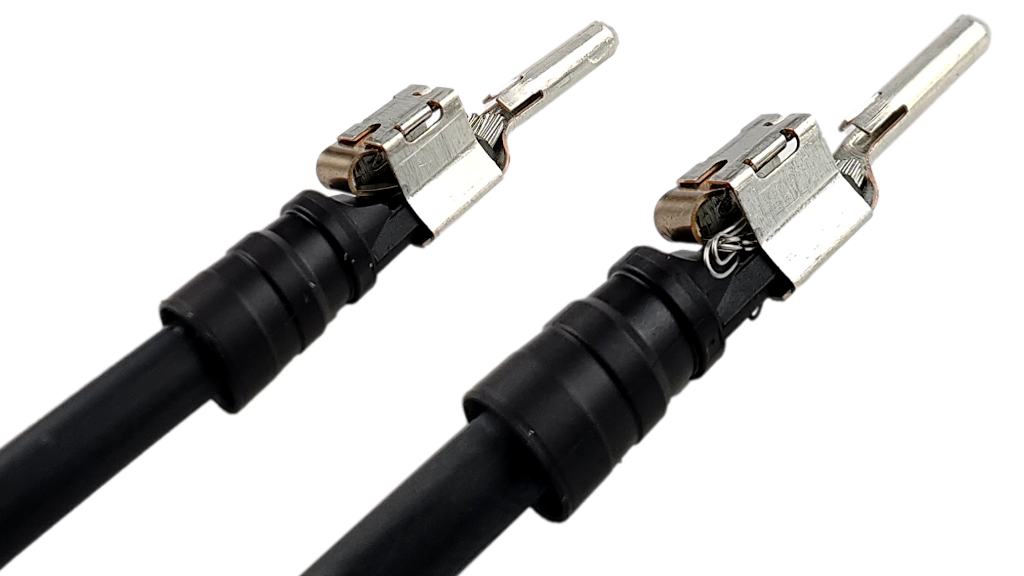
Crimping refers to the precise, plastic deformation of a contact sleeve around an electrical conductor in order to create a permanent, non-detachable connection. In contrast to simple crimping, a defined pressure is applied using a calibrated tool, which results in cold welding. This process forms the technical basis for the success of the MC4 connector in photovoltaics.
The cold welding mechanism
If the crimping process is carried out correctly, the metal structures flow into each other on a microscopic level. The result is a materially bonded unit with two key properties:
- Oxidation protection: the high compression eliminates air gaps. No oxygen can penetrate - corrosion is permanently prevented.
- Minimal contact resistance: The metallurgical connection creates a stable contact resistance over decades.
Crimping technology vs. crimpless technology
| Criterion | Crimping technology (MC4) | Crimpless technology |
|---|---|---|
| Contact principle | Cold welding | Spring or clamping contact |
| Connection type | Material connection | Force-fit |
| Visual inspection | Possible | Not possible |
| Long-term stability | Very high | Dependent on spring force |
The "black box" problem: Why crimped connectors are risky
With crimpless systems, the inside remains invisible after assembly. Stray individual strands or inadequate contacting often go unnoticed during commissioning. Only under full load do these faults develop into hotspots, which can cause expensive damage such as arcing or melting housings years later.
Material fatigue: When the spring force decreases
PV systems are exposed to extreme temperature cycles. While a cold weld remains tight, every mechanical spring is subject to relaxation: over decades it loses tension, which gradually increases the contact resistance.
It all depends on the right crimping tool
The quality depends largely on the tool. Professional installations require:
- System-compatible crimping pliers: Precisely matched to the MC4 contact geometry.
- Cross-section adjustment: Correct adjustment to 4 mm² or 6 mm².
- Calibrated crimping: This is the only way to guarantee a genuine cold weld.
5 reasons why crimping technology remains the gold standard
- Long-term stability: Lasts the entire service life of the system without maintenance.
- Verifiable quality: The stranded wire deposit can be checked visually.
- Oxidation protection: Gas-tight connection prevents corrosion.
- Mechanical immunity: Resistant to vibrations and wind loads.
- Fire protection: Minimizes the risk of hotspots and arcing.
Frequently asked questions
Which crimping tools are suitable for MC4 connectors?
Only use tools that are certified for the geometry of MC4 connectors. Universal pliers often lead to poor crimping.
How do you check the quality?
Ensure that the strands are evenly inserted and firmly seated. The sleeve must not be torn and the insulation crimp must firmly enclose the cable.
Hand Tools & Product Management Division, EMC-direct
Arnd Diedrichs is responsible for the hand tools division at EMC-direct. With over 30 years of experience, he has driven numerous innovations under the Toolova brand. He is an expert in crimping, stripping and cutting tools for photovoltaics and electrical installations.

Download free whitepaper
Find out more about quality standards in our white paper "Knowing - and avoiding - common causes of damage to photovoltaic systems".
Source & further information: www.photovoltaik.eu